Interview Interview with Dr Madhu Jhaveri and Mrs Pallavi Jhaveri
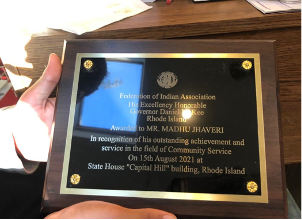
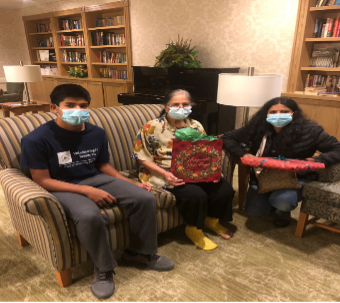
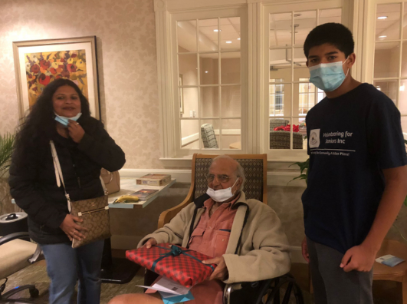
On behalf of Volunteering For Seniors (VFS) Easton, I (Neil Dutta) got the opportunity to interview one of renowned seniors in Massachusetts and learn from their experience. I met Dr Jhaveri (Uncle) and Mrs. Pallavi Jhaveri (Aunty) first in rehabilitation center Lakeville MA first in December 2022 when we went on behalf of Volunteer for Seniors (VFS) to drop off holiday gifts to them. Both uncle and aunty were very welcoming to us and started sharing their experience in USA, their contribution to the Indian community and experience as students at UMASS Dartmouth. Both Uncle and Aunty have lived in Massachusetts for more than 50 years. Uncle was a professor in Civil Engineering at University of Massachusetts, Dartmouth. He is also a scholar of Hindi and ancient Sanskrit literature and has published many books. Uncle received several awards & honors throughout his career and recently, he was recognized by Governor of Rhode Island during India’s Independence Day (15th August) in 2021. I found Aunty very similar to my own Dida and Thumma (my grandmothers) as they are all very loving & caring. Aunty is a pillar of support to Uncle & the Indian community.
During my first visit, Uncle introduced me to ancient Indian language “Sanskrit” and I got to learn from him that Sanskrit was the root of many modern languages. He also explained me that his inspiration was Swami Vivekananda ever since 10th grade. Furthermore, he is also a palmist/hand reader and even read my palm.
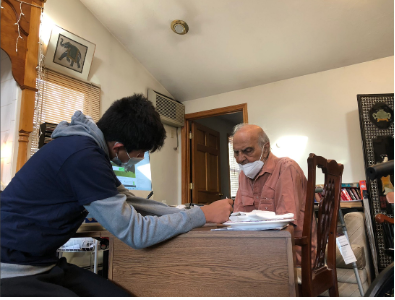
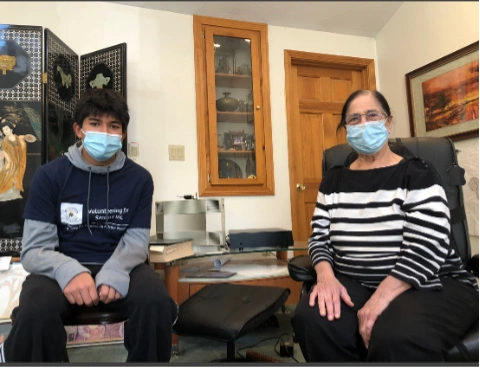
During my second visit on 19th March 2023 at their house in Lakeville, MA when I expressed my interest to interview them, they both agree immediately. During my interview also, I learnt a lot about them and they were both extremely loving and patient to me.
My interview with Aunty (Mrs Pallavi Jhaveri)
How was your Childhood and where did you grow up?
Aunty: “I grew up with my siblings and family in Palitana, Gujrat (It’s a Jain pilgrimage community). I have five sisters and five brothers. We had fun playing with each other, had a good bonding. I like to go to school and had a good childhood”.
What inspired you to come to United States?
Aunty: “I got married and my husband wanted to pursue higher studies in United States. So, we moved here. My husband did his Masters and PhD here. We had kids and got settled here”.
Aunty also mentioned that she and Dr Javeri started the first Vishwa Hindu parishad camp with forty Indian kids in 1979 at Tolland, Massachusetts. She told me “Where my two daughters and other kids go there during summer”.
This camp eventually grew and had close to one hundred fifty kids with age groups from 5 to eighteen years. Aunty explained to us that she played a significant role in that camp. They started the camp because during that time they were very few Indians, children were missing their culture and feeling and isolated in the schools. She used to plan menu, food, games and activities for the kids. Typical morning in the camp used to start with exercise, breakfast followed by classes according to children’s age and group. This way, they took the first step and started the first community organization for children from Indian decent to accommodate the need of community during those days.
What is the most important message you have for my generation?
Aunty: “Keep your culture alive. Indian heritage is culturally very rich”.
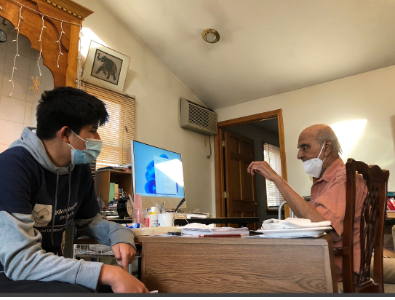
My interview with Dr Madhu Jhaveri (Interview with Uncle was ~ 30 minutes, main highlight from interview is captured below)
How was your Childhood?
Uncle: “I grew up in Bombay (Mumbai), India. I have relatively small family consist of me, my younger sister who is four years younger than me, my mother and father. My mother was a working lady”.
Uncle then started explaining that he was very fond of mother, who was very hard working and very loving. He explained to me different big cities in India Bombay. He explained his education to me and mentioned that his sister is a physician.
What inspired you to come to the United States?
Uncle: “My sister was already in the United States after her marriage. She and her husband, constantly inspiring me to visit to United states and study here”.
Then Uncle explained to me that he was a good student of engineering at Bombay University.
What did you do in the United States?
Uncle: “I came here at North Dakota State University. I stayed with my sister for a week at New York, before I joined the university”.
He mentioned that his stay and education in the United state was financed by his community trustees from Mumbai. He was expressed his gratitude to his community. He then told me his bus journey from New York to Fargo, North Dakota as he was heading for his university. It took him a day and a half to reach there. At there, he was received by his friends and he started living with them.
Could you tell me about Indian culture and heritage?
Uncle: “Indian culture is great and different. It is very broad and helpful culture. It is not self-oriented. Indian live for other people”.
Then Uncle explained to me that lot of Indians are vegetarians like Gujaratis. He gave me examples how he and other people in the community helped students.
He mentioned: “We help each other a lot. I used to be advisor at University for Indian Students. I used to look for their places of living and request my friend who own a Motel at Dartmouth, used to rent the Motels at cheap rate ($40 per week) to new Indian student specially during less busy winter seasons. In turn, Indian student help these motel owners. He and his family also housed many Indian students in their house. I also established Indian student association. Indian students and families help new students to settle here. I organized Indian festivals including Diwali at University and Independence Day”.
He also told me “There is tremendous help in our culture. I was help by many people and as a result I started helping the people. However, when Indian come here, they sometime change due to surrounding. Indian family is combined family and live closely together”. He recommended me a book “Indian family system”.
What is the most important message you have for my generation?
Uncle: “Number one, understand your roots and culture.”
He then pointed me to his own book which is in Hindi, he showed me the picture of his parents. He also again emphasis how Indian help people in the community. He explained
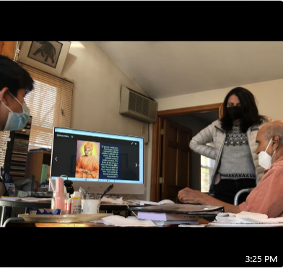
me, how Gujrati community help each other in establishing business and as a result majority of Motels in United States are owned by them.
He also recommended me to read “Thoughts of Power’” by Swami Vivekananda
He told me how this book which he read in ninth grade inspired him, helped and guided him throughout his life. I also read with him different powerful and spiritual quotes by Swami Vivekananda. Finally, he also showed me his the most recent award.
All in all, I am very grateful to Aunty and Uncle to share their wisdom and experience with me.